Organizing a multi-destination trip in Europe is a real pleasure. In the space of a few days, it's possible to cover several different cities, cultures and atmospheres. But without preparation, this type of trip can quickly become tiring and costly.
Many travelers make the same mistakes: wrong choice of itinerary, poorly anticipated budget or inefficient transportation. As a result, the experience loses quality and the cost climbs.
In this article, I'm not just going to point out the mistakes, but also make recommendations.
Choosing an illogical itinerary
The most common mistake is to go from one city to the next without any geographical logic. For example, moving from Barcelona to Berlin and back to Rome wastes time and increases transport costs.
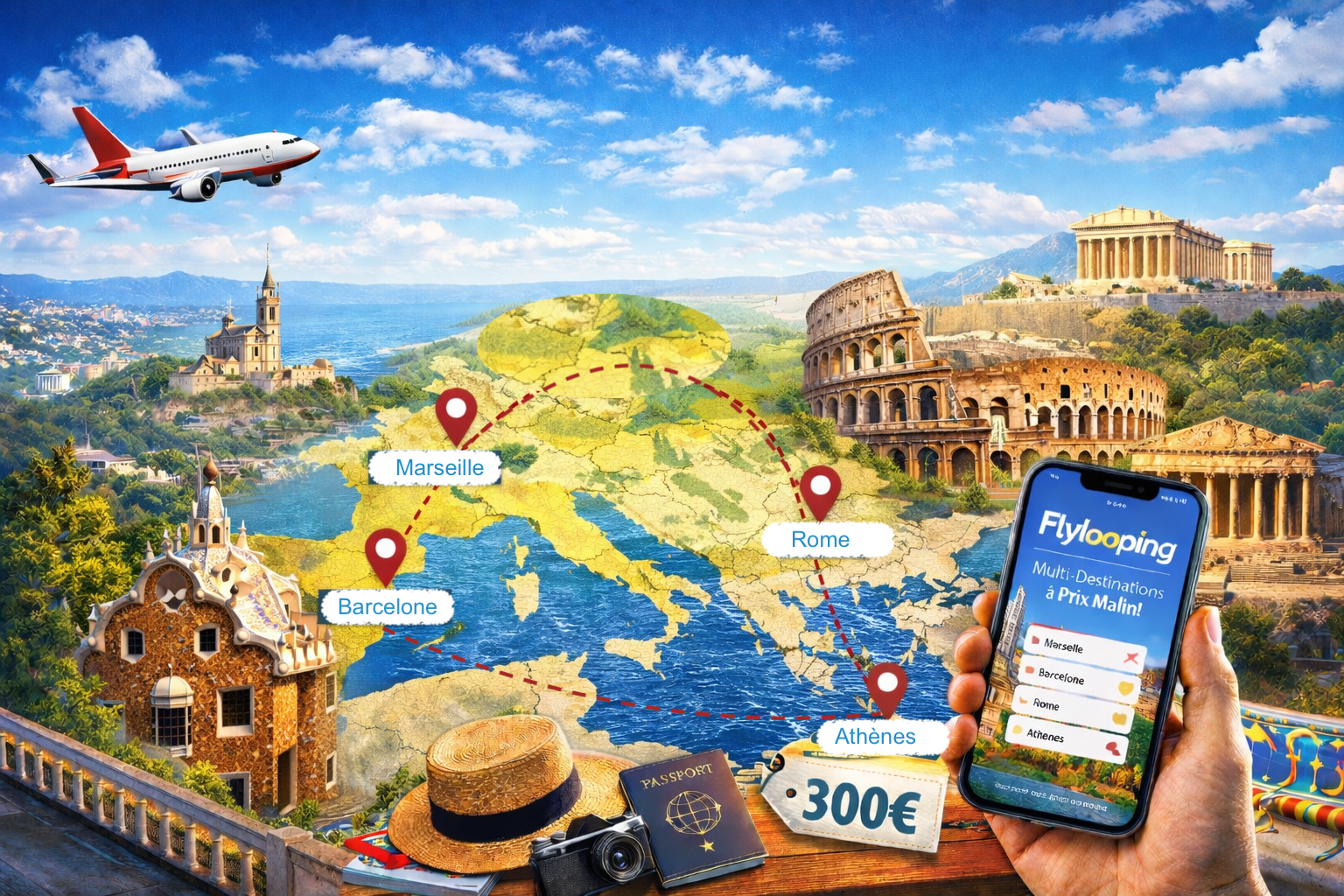
A good itinerary should follow a natural progression. In Europe, tours such as Marseille → Barcelona → Rome → Athènes → Marseille help to limit distances and optimize prices. You could imagine changing cities every day, which would give the impression of making your trip worthwhile, but that’s often counterproductive. Every move takes time: travel, waiting, check-in, transfer. Take into account that half a day should be spent almost entirely on transport. For example, limiting 3 trips to 7-8 days is a good balance. This allows you to really enjoy each destination. Serving your flights one by one is often a mistake. Prices normally vary according to the combination, and some routes are much cheaper than others. Platforms like Flylooping automatically optimize multi-destination itineraries. They combine the cheapest flights between several cities to reduce the overall budget. The result: a smoother itinerary, often less expensive than a classic round trip. Many travelers focus solely on the price of air tickets. Yet accommodation, food and local transport account for a significant part of the budget. In Europe, it costs an average of 15€ 30€ per day to eat and 20€ 40€ to stay in an economical way. Anticipating these costs helps avoid unpleasant surprises. On a multi-destination trip, mobility is essential. Checked baggage complicates travel and increases costs. Low-cost airlines often charge between 30€ and 60€ per bag. Traveling with a single carry-on saves time and money. Generally, cabin baggage can be purchased directly on airline websites. My recommendation is as follows: buy your tickets in advance to benefit from the best prices on Flylooping; once the tickets are locked, you'll have the option of adding cabin or hold baggage later, knowing that these prices don't change (unlike flight prices) A 1h30 flight does not mean 1h30 of actual travel time. You have to add the time it takes to get to the airport, pass through security and wait for boarding. All in all, a déplacement can easily take 4 à 6 hours. Not including this in your schedule can unbalance your entire trip. My recommendation : It's best to plan lighter days around the routes. Flight prices may vary by as much as double depending on dates. Being rigid about your schedule is often a costly mistake. &Flexible departure and return dates can lead to much lower fares. Some platforms like Flylooping exploit this flexibility to automatically suggest the best combinations. Idéalement 3 cities for a séjour de 7-8 days. This means you can enjoy your trip without spending time in transit. No, well optimized, it can cost less than a classic round-trip thanks to low-cost flights between certain cities. Yes, especially flights. Prices rise rapidly as the departure date approaches. Luggage can be added at a later date, smoothing out the price. Wanting to do too much. An overloaded itinerary reduces the quality of the trip and increases fatigue. A successful multi-destination trip relies on a simple balance: a logical itinerary, optimized investments and a controlled budget. By avoiding these mistakes, the experience becomes smoother, more pleasant and often less expensive. So, bon voyage!Étapes too short
Mis-optimizing your flights
Underestimating the overall budget
Traveling with too much luggage
Don't anticipate transport times
Négliger flexibility;
Some recommendations
How many cities should I visit on a multi-destination trip?
Does multi-destination travel cost more?
Do you have to book everything in advance?
What's the main piège à éviter?